
Technical foundations
Review crawlability, indexing, page structure and internal linking so your important pages can be discovered and understood.
8 CORE MARKETING / SEO SERVICES
Connect technical SEO, useful content and conversion-focused pages with the way your customers search. Start with the gaps that matter to your business, then build a clear plan for organic and AI-search visibility.
SEO SERVICES / WHAT WE WORK ON
Review crawlability, indexing, page structure and internal linking so your important pages can be discovered and understood.
Connect search intent with service pages, helpful resources and a clear next step for prospective customers.
Read impressions, clicks, enquiries and search queries together. Use the evidence to prioritize the next improvement.
For two decades, SEO meant one thing: rank on page one of Google. That single goal has shattered into a dozen.
People increasingly ask a question and get a synthesized answer — no list of blue links, no click. The answer is assembled by an AI model that read your content, decided whether to trust it, and chose whether to cite you. Win that moment and you're visible everywhere. Lose it and you vanish, even if you still "rank."
This created a wave of new acronyms — GEO, AEO, LLMO, AIO, GXO — that can feel like alphabet soup. But they're not hype. Each one names a real, distinct way to be found, understood, and trusted across an exploding set of search surfaces. Below is the plain-English version of the language defining search in 2026.
The new vocabulary of search — what each acronym means, and why it changes how you create content.
Structuring your content and brand presence so AI engines cite, recommend, or mention you inside generated answers — on ChatGPT, Gemini, Perplexity, and AI Overviews.
Optimizing content to directly answer a question in clean, extractable form. The goal isn't the ranking — it's owning the answer the engine reads aloud.
Structuring and tagging content so large language models can parse it, understand it, and reference it accurately rather than misquote or skip it.
The umbrella discipline: optimizing for how AI systems as a whole discover, interpret, and interact with your site — the AI-era successor to "SEO."
Preparing your content and commerce for autonomous AI agents that browse, compare, and even buy on a user's behalf — agentic search and agentic commerce.
SEO fused with UX. It cares about the whole journey after the click — speed, clarity, and conversion — not just where you appear.
The AI-generated answer block at the top of Google results. It often satisfies the query outright, which is a major driver of zero-click search.
Google's fully conversational, follow-up-driven search experience — a chat with the index rather than a page of links.
Autonomous systems that explore the web, interpret content, and act — shortlisting vendors or completing tasks without a human clicking anything.
Optimizing around entities — people, brands, concepts and their relationships — instead of isolated keywords, so AI understands who and what you are.
Searches that end with no website visit because the answer appeared on the results page. Visibility now has to happen before the click.
A proposed plain-text convention for presenting selected content to language-model tools. It is not required for Google AI search features and does not guarantee citations.
Google's quality framework — now doubly important, because AI models lean on these same trust signals when deciding whom to cite.
Schema markup and semantic HTML that translate your page into machine-readable meaning, helping AI extract the right facts about you.
Earning references across the web and inside AI answers. In an AI-first world, a mention you don't even link to can still win the customer.
"Search" is no longer one box. Each AI surface reads and rewards content differently — here's how to earn a place in each.
AI summaries pinned above the classic results, pulling from pages Google already trusts.
How to winStrong rankings, crisp answers near the top of the page, and airtight schema.Conversational answers that cite a short list of sources it judges credible and clear.
How to winAuthoritative, well-structured content and mentions across the wider web.An answer engine built on citations — it shows its sources by design on every response.
How to winBe the original, quotable source with data others reference back to.Google's conversational layer that reasons across the index and follows up in context.
How to winTopical depth, entity clarity, and content that answers the next question too.The fundamentals still matter — but the goalposts moved. Here's the honest before-and-after.
Zero-click is real, but it hits some queries far harder than others. Knowing the difference is how you protect your traffic.
"What is a clear aligner?" AI answers these instantly. Your play here is to be the cited source and build brand familiarity, not chase the click.
"Best aligners for crowding." Users still compare and click — but AI shapes the shortlist. Win by being recommended and ranking.
"Order aligners online." People come to act, so the click survives. Classic SEO and CRO still own this stage of the funnel.
Six moves that earn citations, mentions, and rankings at the same time — the system we run for our clients.
Cover a subject deeply and connect the entities within it. Depth and breadth are how models decide you're a credible source worth citing.
02Lead with the answer. Clear headings, concise definitions, and question-and-answer formatting make your content trivial for AI to lift and cite.
03Digital PR, original data, and expert commentary get you referenced across the web — the strongest signal that you deserve to be the answer.
04Real author bios, first-hand experience, and original research build the trust both Google and AI models weigh before recommending you.
05Keep important content crawlable and available as text. Use clear HTML and relevant structured data; no special AI file or schema is required for Google AI Overviews or AI Mode.
06Track how often you're mentioned in ChatGPT, Perplexity, and AI Overviews — not just rankings. You can't grow a surface you don't measure.
If you can tick most of these, you're ahead of the curve. If not, that's exactly the gap we close.
The AI-search conversation is full of hype and panic. Here's what's actually true.
"AI killed SEO — there's no point optimizing anymore."
✓ RealityThe work expanded. The same quality, authority, and technical signals now feed both rankings and AI citations. Optimizing matters more, not less.
✕ Myth"GEO is a brand-new skill set with nothing in common with SEO."
✓ RealityGEO is built on SEO fundamentals — structure, authority, trust. The destination changed; the foundations didn't.
✕ Myth"If AI answers the question, my traffic is gone for good."
✓ RealityInformational clicks shrink, but commercial and transactional clicks hold. And being the cited source builds brand demand that converts later.
✕ Myth"You can trick AI engines with keyword stuffing, just like the old days."
✓ RealityModels weigh trust, clarity, and corroboration. Thin or manipulative content is ignored — genuine expertise wins the citation.
Where search is heading — and how to be early instead of late.
AI summaries appear on a growing share of searches and zero-click behaviour deepens. Being the cited source becomes a core visibility goal.
2026Brands stop thinking "Google-only." Visibility is measured across ChatGPT, Gemini, and Perplexity, and GEO/AEO move from experiment to standard practice.
Late 2026AI agents begin browsing, comparing, and shortlisting on users' behalf. Content and commerce must be readable and trustworthy to machines, not just people.
2027Agents don't just recommend — they transact. The brands that prepared their data, trust signals, and structure now will be the ones agents choose.
The same answer-first, authority-led approach we're describing is exactly what we run for our clients — with results pulled from real Search Console data.
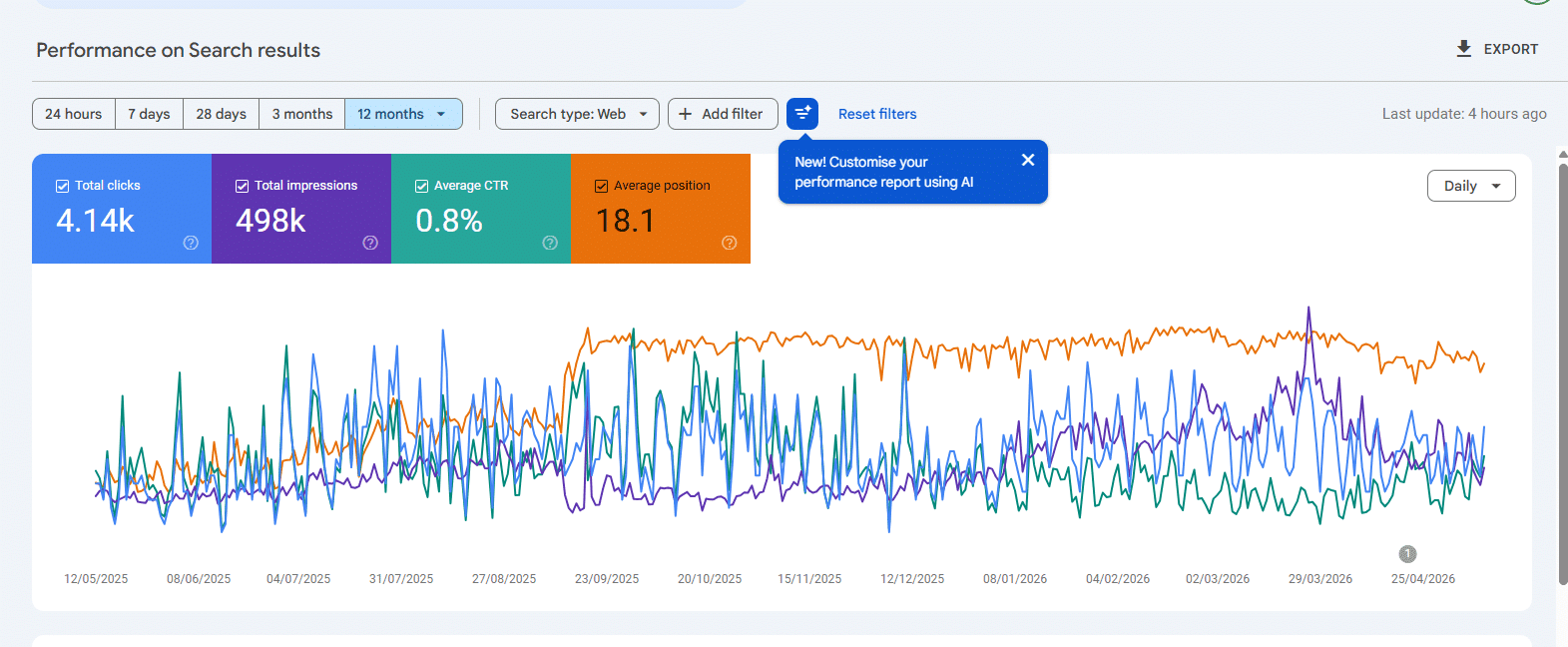 Dental B2B · SEO + Content
No — but the definition expanded. The fundamentals of quality content, technical health, and authority still drive everything. What changed is the destination: you're now optimizing to be the cited answer across many AI surfaces, not just a ranking on Google. Brands that adapt gain visibility their competitors lose.
SEO improves your visibility in organic search results. AEO (Answer Engine Optimization) structures content to directly answer questions so engines can lift it. GEO (Generative Engine Optimization) goes further — shaping how AI models summarize and cite your brand inside generated answers. In practice they overlap heavily and you pursue all three together.
They can reduce clicks on informational queries, since the answer often appears on the results page. The counter-move is to be the source the overview cites and to target queries where users still need to click — comparisons, transactions, and deep guidance. Being named in the answer builds brand trust even without the click.
Be a clear, credible, well-structured source. Publish original data and expert insight, earn mentions across the web, mark up your content with schema, and answer questions directly and concisely. AI models favour content that's easy to extract and backed by trust signals.
Yes — but think in topics, entities, and questions rather than isolated phrases. Understanding the real intent behind a query and the entities connected to it matters more than matching exact keywords. Keywords are a starting point, not the destination.
llms.txt is a proposed way to present content to language-model tools. Google does not require it for AI Overviews or AI Mode. Prioritize crawlability, indexing, useful content and accurate business information.
Like SEO, it compounds. Technical and structural fixes can influence how AI reads your content within weeks, while authority and citations build over months. Our Clear Moves Aligners engagement moved from page 4 to page 1 in roughly six months — meaningful traction in a quarter, momentum after that.
Start with where your audience already is. For most brands that's Google AI Overviews first, since it sits on top of the search they already use, followed by ChatGPT and Perplexity. The good news: the fundamentals that win one engine — clarity, authority, structure — tend to win them all.
Smaller, focused brands often have an edge. AI models reward genuine depth and expertise on a specific topic — which a niche business can build faster than a sprawling enterprise. Being the clearest, most credible source on your subject is very winnable.
 Work With Us
GEO, AEO, AI Overviews, agentic search — it's a lot to keep up with while running a business. We do this every day, for brands exactly like yours. Let our team turn the shift into your advantage.
Talk to a StrategistWe'll audit how visible your brand is across Google, AI Overviews, ChatGPT, and Perplexity — then map the exact GEO/AEO plan to win the answer.
Free · No obligation · Backed by real search data
Get My Free AI-Search Audit Chat on WhatsAppLocal market coverage
Explore market-focused SEO services built around the search behavior, competition, and opportunities in your city.
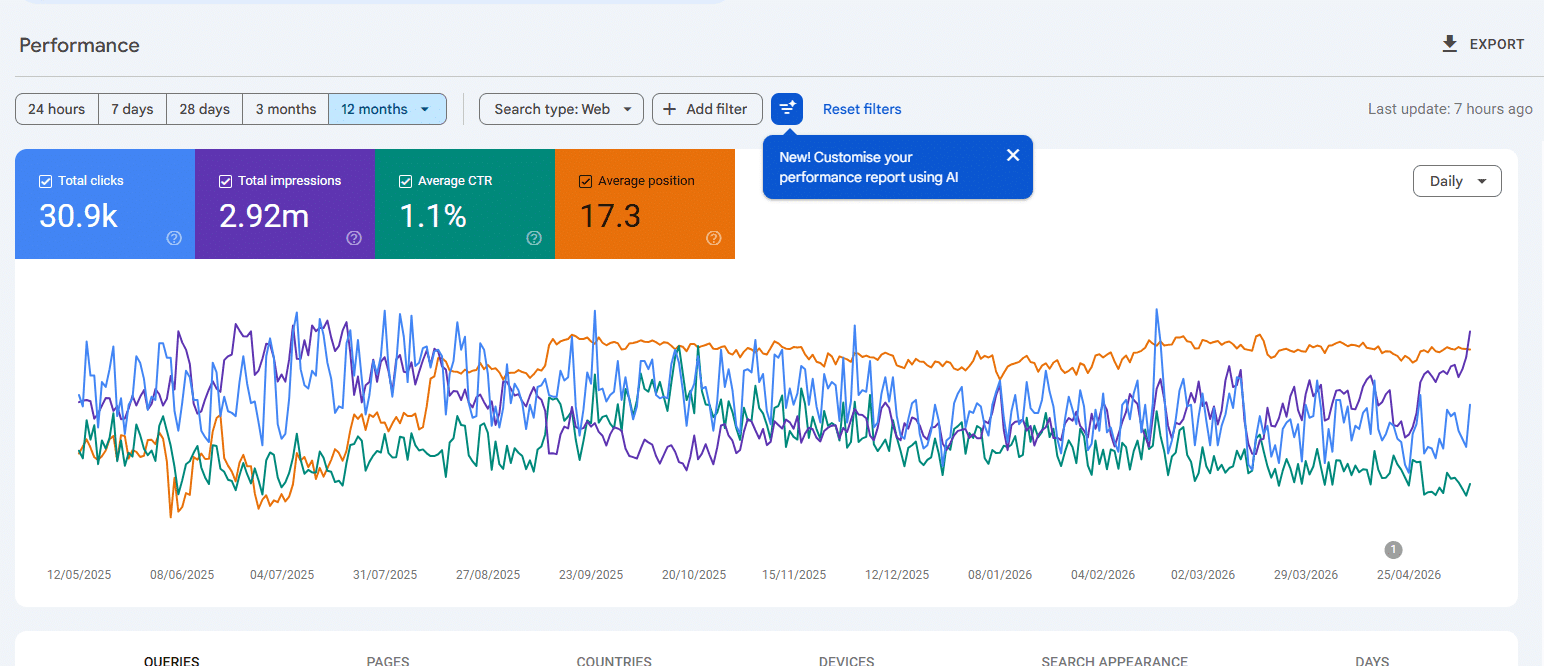 D2C · Branding + Shopify
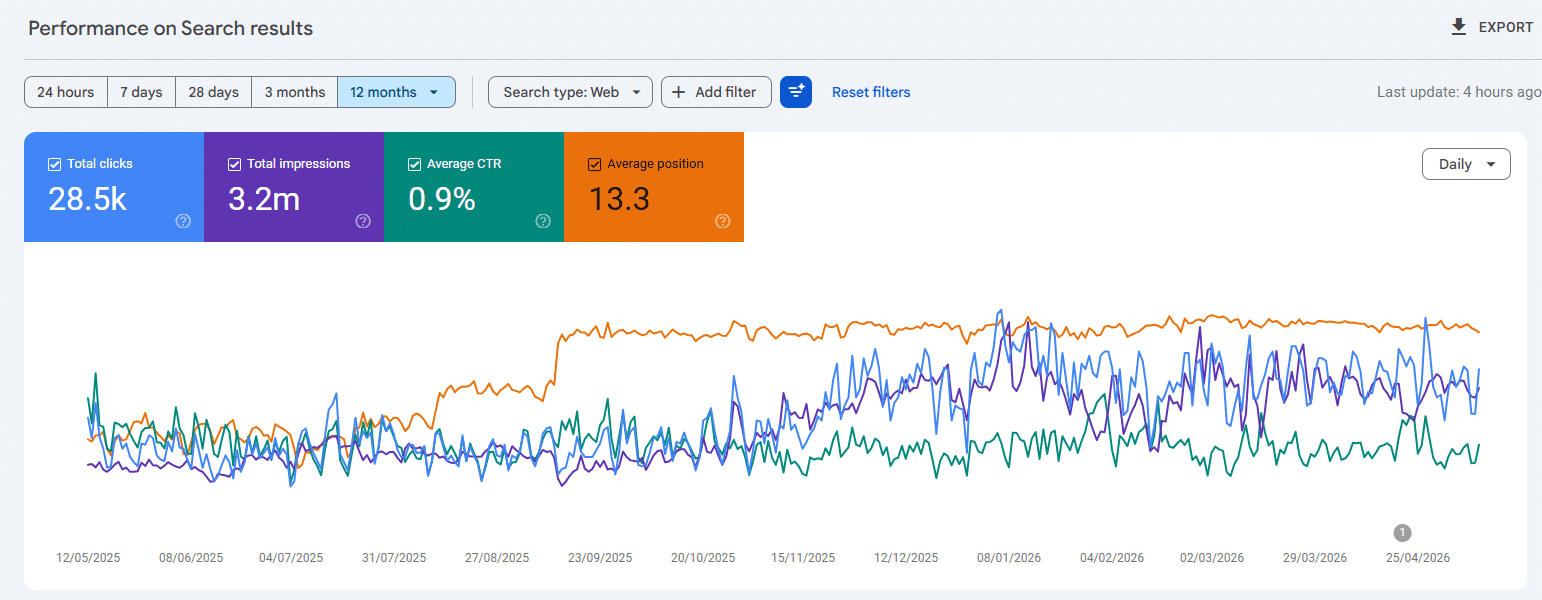 D2C · SEO + E-Commerce